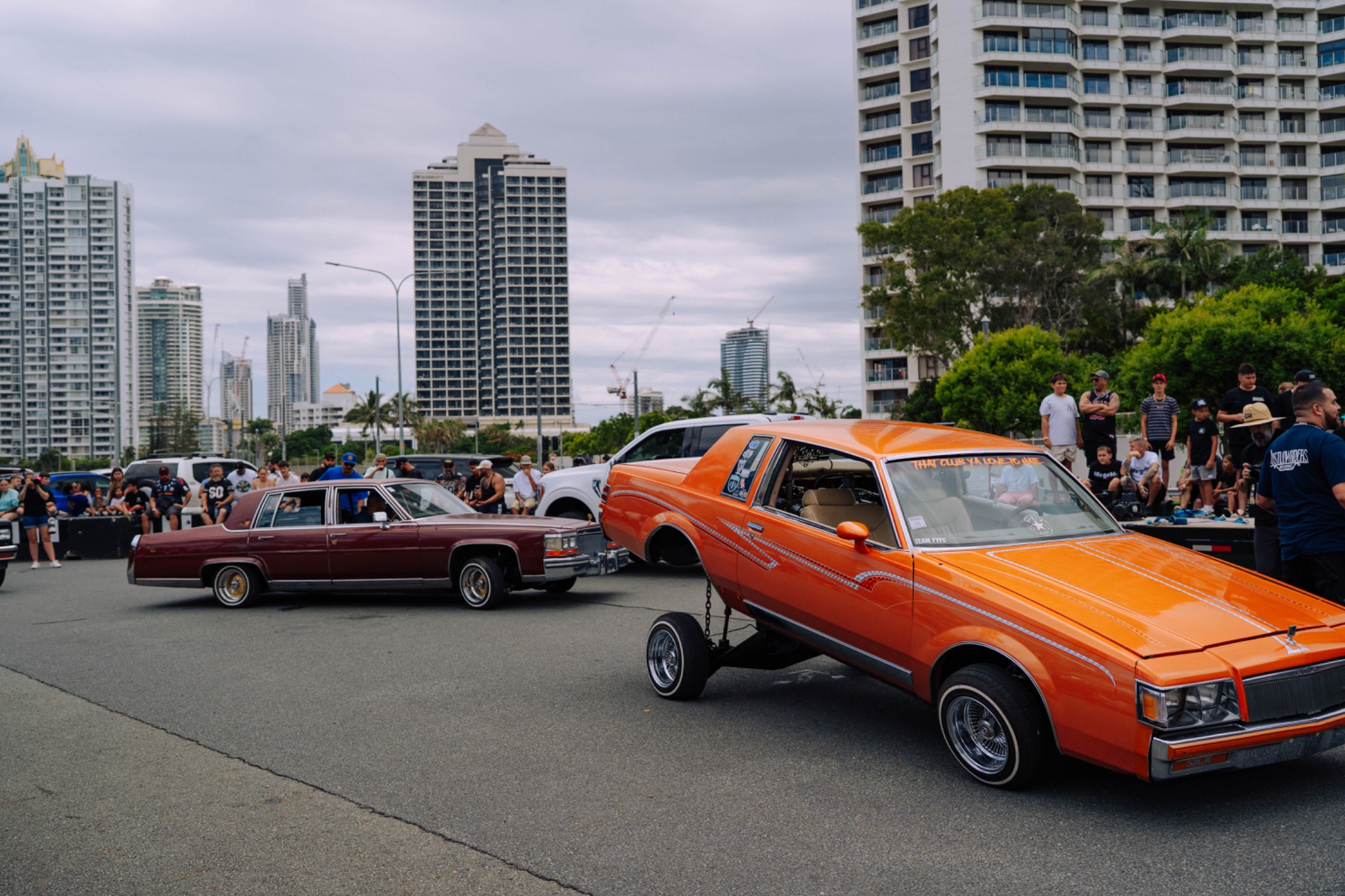
Lowriding is easy to recognise in a photograph: a classic American car sitting close to the road, polished wire wheels, paint that rewards a closer look. But the Australian lowrider scene is not only a collection of cars. It is also the time spent building, the people who gather around a project, the owners who bring their vehicles out, and the records that help a community remember its own story.
An American cultural tradition, told with care
The history most often associated with lowriding begins in Mexican American communities in the United States during the 1940s and the post-war years. The Smithsonian describes lowriding as a tradition shaped by Mexican American and Chicano identity, artistic expression, family and community. San José State University’s research guide also notes that accounts of lowriding’s beginnings vary. It is more accurate to describe a broad cultural history than to assign the whole movement to one inventor, place or single origin story. [1] [2]
In that history, the car is both a crafted object and a way to be seen. Museum accounts describe clubs and families preparing vehicles for cruising, shows and competition. Lowriders are built to move at a deliberate pace and invite attention to their detail, rather than to chase speed. Those American histories are important context for Australian readers, but they should not be presented as proof of how the local scene began or who belongs to it. [2] [3]
The craft lives in the details
Chevrolet Impalas, Cadillacs and other classic Chevrolets are familiar shapes in lowrider culture. A finished build can bring together careful panel work, custom paint, chrome, wire-spoke wheels, upholstery and suspension changes. Hydraulics can allow a car to be raised or lowered, and some documented builds use them to animate the vehicle. These are possibilities and recurring visual traditions, not a checklist every lowrider must meet. Each owner and builder makes different choices. [3] [4]
That individuality is part of what makes a vehicle feature worth doing well. A photograph can show the stance and finish; a useful story also records what the owner chose, what the work involved, who helped, and what the car means to the people connected to it. Those details belong to their makers and should be published with their permission and accurate credit.
A local scene documented in gatherings
One published glimpse comes from a 2009 report about a gathering at Sydney’s Homebush Bay. The writer described about ten cars when they arrived and around thirty by the end of the day, named several clubs represented, and mentioned a barbecue and a hop-off. The author called it Australia’s first lowrider event; that wording is the report’s claim, not a settled national chronology. A single event report cannot stand in for a complete history of lowriding across Australia. [5]
Fresh Stylz Lowrider Car Club’s profile identifies it as an Australian club and says it was founded in 2005. That is a useful, self-reported club milestone—not proof of when Australia’s entire lowrider scene began or a complete national timeline. [6]
Lowrider Sunday’s organisers describe their event as beginning with a small Central Coast meet-up of local lowriders before developing into an annual show-and-shine. That account offers another useful local thread, while remaining an organiser’s history rather than an independent measure of the scene’s size or growth. [7]
Community publishing adds another layer. Lowriders Australia & New Zealand describes its work as connecting enthusiasts across both countries and sharing cars, events and businesses. That is evidence of the platform’s stated purpose and activity, not a census of everyone involved. Taken together, these sources document particular gatherings and community efforts; they do not provide a complete timeline or reliable national statistics. [8]
Identity should be described, never assumed
This feature was asked to consider Australian, Māori, New Zealand, Samoan and Tongan communities. The public sources reviewed for this article do not reliably establish Māori, Samoan or Tongan participation or collective influence in Australian lowriding. That is a gap in the material we found, not evidence that people from those communities are absent. A person’s identity should not be inferred from a name, appearance, club label, music or a broad Australia–New Zealand connection. Better reporting starts with people who choose to identify themselves, and with their consent and own words.
Documenting the culture is part of the work
Australian lowrider events, builds and owner stories deserve a record that is as considered as the cars themselves. That means keeping useful dates and locations, naming clubs only when confirmed, identifying photographers, recording vehicle details from owners, and preserving first-person accounts without turning one person’s experience into a claim about everyone. It also means correcting the record when new evidence appears.
A growing archive does not need invented numbers or grand claims. It can begin with well-attributed photographs, accurate build profiles, event coverage and stories shared by the people who made them. Lowriders Australia’s Featured Rides, Events and Business Directory are part of that wider record, alongside this editorial section.
The next chapter belongs to the community
The next generation will meet Australian custom-car culture through cars, family and friends, shows, online publishing and the stories that are passed on. We should not assume who is already involved or describe a local generational trend without evidence. We can make space for new voices by recording the work carefully, inviting first-person contributions and treating every build as more than a photograph.
The Australian lowrider scene is best understood through the people who keep showing up and the record they leave behind. Cars draw the eye. Community gives the culture its depth. The work now is to document both—with respect, accuracy and room for more stories to be told.